Civilian oversight blues: inside Chicago’s ongoing police accountability meltdown
Chicago has a new community police oversight body that emerged in response to the historic 2020 protests. According to those elected to serve, however, it’s already full of cops.
by Zoë Takaki Aug 27, 2026
Share this article:
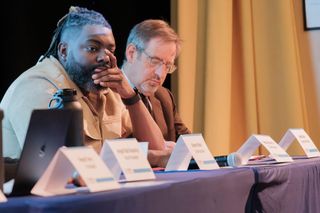
The first thing you see upon opening the door to a meeting of Chicago’s 22nd Police District Council is a wall of cops.
Commander Patrick Darling is seated at the head of the room. Next to him, 22nd District Councilor Patrick Kennedy dons a Blue Lives Matter hat. In the small crowd of eight or so people, another cop writes in a notebook with the CAPS logo. The topic of the day? Recent crime statistics. One woman suggests fining parents $500 for every kid arrested in response to “teen takeovers.” Another man rants about America spending too much money on immigrants.
Retired Sergeant Lee Bielecki, one of the councilors elected to represent the community in matters of police accountability across the city’s 22 police districts, talks for 30 minutes about the failures of Chicago media in covering the good the Chicago Police Department (CPD) does.
He also complains about his fellow police district councilors across town.
“You know who I’m talking about, you’ll figure it out,” he encourages the audience with a smirk.
“Thanks for coming to the Lee Bielecki show,” Kennedy jokes.
The meeting in Auburn Gresham—a neighborhood with one of the highest numbers of allegations of police misconduct—ends with little discussion about police accountability.
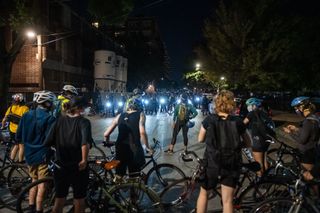
As May 2020 came to a close, Chicagoans traded in their TV remotes for N95 masks and picket signs. It felt like everyone had seen the video out of Minnesota; Minneapolis police officer Derek Chauvin kneeled on the neck of a Black man, 46-year-old George Floyd, for over nine agonizing minutes. The country exploded from coast to coast.
CPD officers beat and arrested over 1,500 Black Lives Matter protesters on just the first weekend of mass demonstrations. Undeterred, organizers continued marching and rallying everywhere that summer, from the sleepy suburbs to Mayor Lori Lightfoot’s block in Logan Square. Cops kettled demonstrators in a city divided by raised bridges, and ultimately, the cost to defend and settle lawsuits against the city stemming from alleged police misconduct during the uprising would amount to $12.8 million. The department’s brutal and costly crackdown prompted more people to join the ongoing protests, and a groundswell of grassroots support for a fresh approach to police oversight erupted—helped along by backlash to the Lightfoot administration’s handling of it all.
Enter the CCPSA (Community Commission for Public Safety and Accountability).
“There was palpable support for moving something,” Alderman Andre Vasquez told Unraveled. “[…] it was tense because people wanted change, they wanted the accountability, but they had different lenses of looking at it.”
The commission itself was born out of a compromise.
After Jason Van Dyke murdered Laquan McDonald in 2015, putting 16 bullets in the 17-year-old’s body, a coalition of groups called Grassroots Alliance for Police Accountability (GAPA) began championing a police oversight body with civilians at the helm. Rather than eliminate the existing Civilian Office of Police Accountability (COPA) and the Chicago Police Board, supporters of GAPA—including Lightfoot, also former president of the Police Board—wanted to work alongside them.
Some organizers against police violence worried about further entrenching existing bureaucracy, and called for something they felt had more teeth. Their proposal, which eventually came to be backed by some progressives on City Council, was the Civilian Police Accountability Council (CPAC) ordinance. It aimed to eliminate existing accountability agencies, and instead establish a fully elected civilian CPD oversight board.
“Ultimately, nothing was going to move forward unless the two groups aligned,” said Vasquez.
The two groups ended up making a deal, and eventually earned Lightfoot’s support. The “Empowering Communities for Public Safety” ordinance passed in July 2021. Its passing established the CCPSA, a commission of seven people responsible for overseeing police accountability in Chicago. The compromise also established another, massive public body: a 66-person assembly of elected “police district councilors,” three people per district designated as liaisons between the CCPSA and the public. District councilors are tasked with holding regular meetings for community members to discuss police misconduct and accountability in their neighborhoods.
The legislation was the first of its kind in the country.
“The objective was always accountability,” Chicago Alliance Against Racist and Political Repression (CAARPR) Field Organizer Frank Chapman told Unraveled.
According to their mission statement, the CCPSA is responsible for overseeing not just CPD, but also the Police Board and COPA—two other city bodies already responsible for responding to police misconduct. It is the third public body created specifically to manage matters of police accountability in Chicago (COPA, the agency responsible for handling the nitty gritty of forensic investigations into specific allegations against cops, also had its own now-defunct predecessors).
The police department also operates under a federal consent decree, has their own “internal” investigations unit riddled with corruption, and is periodically investigated and audited independently by the Chicago Office of the Inspector General (OIG).
In total, seven separate groups and agencies are now tasked with holding 11,500 police officers “accountable” in some way.
The CCPSA was designed to introduce a community-led lever—but its short history so far has been wrought with dysfunction.
“The epitome of obstructionism”
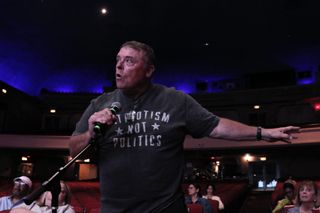
One of the key responsibilities of the district councilors is selecting the nominees for the seven seats on the CCPSA. A nominating committee made up of one councilor from each district works together to choose those nominees, who then go on to the mayor for final selection.
After a meeting of that nominating committee on February 17, Councilor Lee Bielecki showed up at former commissioner Abierre Minor’s apartment building uninvited—allegedly to “confirm her residency.” At a press conference the following month, Minor expressed her discomfort over the incident, sharing that her grandmother encouraged her to resign her seat, citing the history of “bad actors showing up at Black homes in the middle of the night.”
20th Police District Councilor Deirdre O’Connor said she believes the incident is partially the result of Bielecki’s experience as a police officer.
“He’s still thinking that he has a badge and is using it. So I definitely think that there has been influence that has happened,” she said.
Other district councilors who have ties to CPD through endorsements from the Fraternal Order of Police (FOP)—the world’s largest organization of sworn law enforcement officers—have also threatened progressive district councilors.
Councilors from the 8th Police District called for the resignation of 10th District Councilor Kiisha Smith over a Facebook post referencing the fatal shooting of Timothy Glaze, which occurred the month prior. In a post promoting that month’s district council meeting, Smith wrote: “Come out and join us to address all of your community concerns! COPA will be present to answer your questions, and to address your concerns regarding the Police Murders in the 10th District! #CAARPR #CCPSA #DistrictCouncil.”
Days later, 23rd Ward Alderperson Silvana Tabares and 24th Ward Alderperson Monique Scott wrote a letter to the CCPSA President at the time, Anthony Driver, in response to the Facebook post.
“This rhetoric and the use of social media to promote a city sponsored event with an organization which advocates for defunding the Chicago Police Department is wholly unprofessional, incendiary, uninformed, and dangerous,” they wrote.
The following day, FOP-endorsed 8th District Council members Jason Huff, Al Cacciottolo, and Mark Hamberlin, demanded Smith’s resignation. Smith then received an anonymous email that called her racist misogynist slurs and threatened to be at her next public meeting. She said she did not feel backed by the commission during this time, claiming they were unwilling to support her publicly.
“I was definitely expecting to be supported more and better, especially since CCPSA and myself are a team, or supposed to be a team,” Smith said. “They really wanted me to change my social media posts and, you know, some other things that I didn’t think were appropriate.”
In the 5th district, one of the district councilors is former Chicago Police Captain Thomas McMahon, who worked for the department for 37 years. District Councilor Ponchita Moore, who works alongside McMahon, says that their meetings often have heavy police presence, and that their first meeting ever “resembled a CAPS meeting,” with police officers passing out CAPS literature to attendees.
Moore said police officers attending the district council meetings constantly refer to McMahon as “Captain.”
She told Unraveled it feels like a conflict of interest.
“The impact that I’ve noticed is, once again, residents come thinking that it’s a CAPS meeting, and they come with their complaints about the community versus the way that the police show up right in our community,” she said.
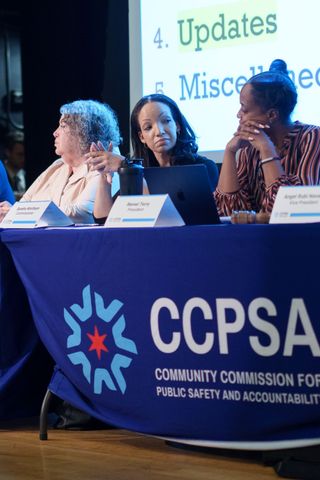
The police ties extend from individual district councils to the seven-member commission itself.
Commissioner Sandra Wortham served as civilian Deputy Director in the Bureau of Patrol from 2010 to 2015. She has been volunteering for the Chicago Police Memorial Foundation since 2020; in 2023, she became executive board president. Her father, Thomas Eugene Wortham III, is a retired CPD sergeant, and her brother, Thomas Eugene Wortham IV, was a CPD officer for almost three years when he was fatally shot in 2010 during an attempted robbery in front of his parent’s home.
She is also trying her hand at performing stand-up comedy routines for the FOP to encourage officer wellness, according to their newsletter and social media posts.
District councilors and community members say Wortham is resistant to the mission of police accountability. She frequently dismisses calls for change to the police department, and has claimed the public doesn’t understand the law.
This became evident during a long-awaited special meeting with former police superintendent Larry Snelling in April about ICE and CPD collaboration, where Wortham was the only commissioner to vote “nay” to recommending the OIG open an audit into CPD’s implementation of the Welcoming City Ordinance. Even Snelling said that he was for the OIG opening an audit.
In 2024, community members gathered over 2,000 signatures to hold a special hearing on pretextual traffic stops. This triggered the CCPSA to conduct a series of listening sessions where the public shared their experiences with traffic stops. When the commissioners voted on changes to traffic stop policy, Wortham voted against all five. She was the only commissioner to do so. Currently, Wortham is one of two commissioners on the CPD policy working group responsible for implementing these policy changes and restrictions. Their implementation remains stalled.
“I am frustrated with the lack of traffic stop progress,” Commissioner Anthony Driver said at the monthly CCPSA meeting in July.
The meeting ended in an argument between commissioners over Wortham’s abilities to serve on the working group to recruit new superintendent candidates.
Wortham’s nomination to the council in 2024, according to Seventh Police District Councilor Dion McGill, was heavily championed by conservative district councilors on the nominating committee who are working against accountability efforts.
He said the committee decided to vote as a cohort instead of individually. The thought was if progressive district councilors voted against Wortham’s nomination, conservative district councilors would retaliate and vote against the candidates the progressive district councilors were supporting. Thus, they decided to vote for them on a slate, which laid the path for Wortham’s nomination. McGill said he was the only member of the nominating committee to vote against the slate.
“If it’s not a ‘fuck yes,’ it’s a ‘fuck no.’ And today was a ‘fuck no,’” McGill said, calling Wortham “the epitome of obstructionism.”
“I think that her being on the commission serves the purpose of creating distrust in this accountability measure,” 12th District Councilor Leonardo Quintero said.
Wortham was also against holding a special meeting to discuss CPD’s interactions with federal immigration agents during Operation Midway Blitz. Members of the public and police district councilors pointed to dozens of documented incidents of CPD officers seen assisting ICE agents, which would violate Chicago’s Welcoming City Ordinance.
Sandra Wortham did not respond to a request for an interview.
“I no longer get goosebumps”
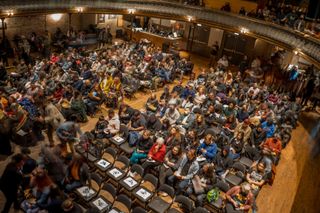
While the first calls for a special meeting with CPD Superintendent Snelling came as early as November, the meeting did not take place until April, once the daily tear gas and Gregory Bovino had cleared the scene.
“It’s hard for me to grasp how this wouldn’t be the number one thing for a police accountability arm of the city of Chicago,” 20th District Councilor O’Connor said.
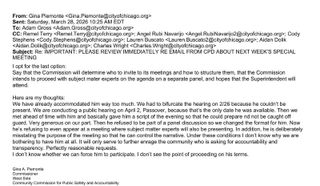
According to email communications between commissioners obtained by Unraveled, commissioners met with the Superintendent prior to the April meeting to go over his answers. Snelling refused to appear at a meeting where subject matter experts on immigration enforcement would be presenting.
“We met ahead of time with him and basically gave him a script of the evening so that he could prepare and not be caught off guard. Very generous on our part,” wrote Commissioner Gina Piemonte.
She said the commission as a whole had “already accommodated him way too much:”
The FOP makes a strong impact in the district councilor election process, endorsing candidates that align with their pro-police mission and trying to take those who don’t down. During the last election cycle in 2023, the FOP spent at least $25,000 trying to knock progressive candidates off the ballot, hiring lawyers to challenge the candidacy of those they oppose in the 19th, 20th, and 24th districts. Election attorney for the FOP and internet ragebait troll Perry Abbasi, who challenged the petitions, also ran in the 25th District. He lost the election after The Chicago Reader reported on his racist and misogynistic social media posts.
“The FOP, the entire time we ran, had us in court trying to throw us off the ballot,” 20th District Councilor O’Connor said. “I kept raising money, I kept knocking through doors, just hoping that, you know, our lawyer felt confident that there was nothing that said that we couldn’t do it, and we ended up winning.”
She said as she thinks about running this next election cycle, she considers how the FOP will impact her campaign again.
“What other tactics the FOP will use to try and get more you know, like-minded district councilors on to these individual councilors to try and really, what I think is obstruct the process and the good work that we’re doing,” she said.
The FOP also endorsed conservative candidates and supported them on their campaign.
“They only ran candidates to try to undermine what we were doing,” said Chapman of CAARPR. “They’ve always been trying to corrupt the process by undermining and impeding the ability of the CCPSA to hold the police accountable.”
Many of the district councilors who work against accountability efforts are on the nominating committee. Just under a third of them were endorsed by the FOP or have ties to CPD.
“FOP district councilors are very good at following the same orders and the same movements and the same votes. They’re very good at staying on brand. And I do think that that has influence when it comes to things like the nominating committee,” Quintero said. “If they want one person, that’s the person that they’re pushing for, if they want to block someone, they will all vote against it.”
The district councilors do count some successes. After an extensive organizing campaign in 2023, the CCPSA passed a policy that bans CPD officers from participating in hate and extremist groups. The 8th and 19th District Councils have also worked together to put forth a proposal for a pilot program called the Parking Alternative Response Team; it would allow Parking Enforcement Aides to respond to 911 calls related to parking violations instead of cops. The ordinance that would enact the program has yet to make it to City Council.
“I really don’t want the drama of the commission to overpower the real important work that people like Leo Quintero are doing on the ground in their communities, what Elly is doing in her community, what Erin is doing in her community, these district councilors,” O’Connor said.
CAARPR, meanwhile, has put forward another referendum. It would make each of the seven commissioner positions democratically elected instead of by committee. Organizers hope the change will make the commission more effective.
“It’s been working. It hasn’t been working as well as we wanted to work,” Chapman said.
Some fear elections for CCPSA spots could intensify FOP attempts at influence. Quintero said he is trying to make sure that doesn’t happen.
“But it’s hard when we have a whole other half of us that are intentionally creating barriers to that accountability,” he added.
Less than a year into the CCPSA’s enactment, he told executive director Adam Gross, “I believe that this is a failed project already. We have too many police officers in these roles.”
“During the election, I would get goosebumps talking about the transformative power of what district councilors and the commission can do,” 9th District Councilor Erin Vogel said. “And it’s been a disappointment that we haven’t been there. I no longer get goosebumps.”
Raven Geary contributed to this reporting.
Related Stories
-

In plain sight: a year of ICE using Chicago police parking lots for its operations
Videos and witness testimony show immigration agents continue using Chicago police station parking lots despite a ban on their access to city property. Records obtained from the Civilian Office of Police Accountability show the office has received at least seven complaints over ICE using police property since March.
-

Growing where he died: Silverio Villegas González, one year later
One year on from the killing of Silverio Villegas González, a community of Franklin Park women continue the fight to keep his memory alive–through art, flowers, and “a culture of celebrating life.”
-
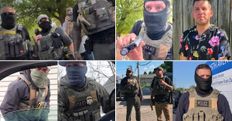
Chicago ICE team seen threatening drivers has roamed from Illinois to Minnesota to Virginia
A federal agent from Chicago identified by community members as 40-year-old Martin Lagunas was recorded pointing his gun in a Virginia woman’s face on Monday. His team of ICE agents has been documented intimidating observers, drivers, and protesters across at least three states in the last year.