Feds “conducting surveillance” at domestic violence courthouse, internal documents show
A court general order and new state law have not stopped ICE from increasingly staking out Chicago area courthouses for arrests since February. Sightings of federal agents near court continue this week as “processing” of detainees at Broadview has accelerated.
by Dave Byrnes May 13, 2026
Share this article:
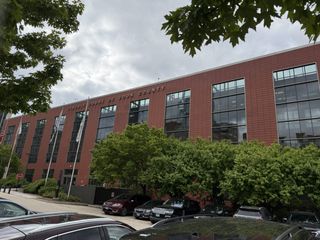
Federal immigration agents have appeared at or near Cook County courthouses on over two dozen occasions since the end of February and early May, according to data provided to Unraveled by the Cook County Public Defender’s Office—and their visits have continued into this week.
At least 10 visits have resulted in arrests, during which the Public Defender’s Office reported agents taking at least 12 people, possibly more.
The recorded arrests included a mix of public defender clients and those with private attorneys. Deputy Public Defender for Policy Sharlyn Grace said at least one person was also detained outside a courthouse after their misdemeanor case had been dismissed. The Public Defender’s Office collated the list through a combination of sources, including community Immigration and Customs Enforcement (ICE) watchers and rapid responders.
Still, Grace said, “it’s certainly an undercount.”
Federal immigration agents in the Chicago area have been changing how they operate in general since the start of spring, eschewing the spectacle of U.S. Border Patrol’s raids during Operation Midway Blitz and returning to the more clandestine urban policing tactics they made use of prior to the fall.
Processing through the ICE facility in suburban Broadview has also quickened, according to Grace. Clients in DHS custody have told the Public Defender’s Office they spent only a few hours there before being swiftly moved to other states like Indiana, Kentucky and Texas.
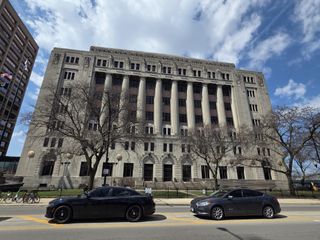
According to the public defender data, the most frequent target for immigration agents’ courthouse visits has been the Cook County Domestic Violence Court located at 555 W. Harrison Street in Chicago. Appearances there account for 12 of the 26 confirmed incidents, and six of the reported arrests, which the office tracked between February 27 and May 8. The Domestic Violence Courthouse sits across the street from the United States Custom House.
Collecting and verifying data about courthouse-related immigration abductions can sometimes take weeks, Grace added. Once in immigration detention, people often have less access to legal counsel and contact with the outside world.
“Most of the abductions at court that have happened this year have not been in court or in the immediate view of a public defender employee. Many of these we have heard about after the fact, and we’ve done our best to verify,” Grace said. “You know, oftentimes it’s weeks, actually, before we hear. Last week, at the end of the week, we heard about two clients who were arrested by ICE as they left their home to travel to court…and they never arrived at court.”
Internal reports (1, 2) to Cook County commissioners from the county’s Department of Emergency Management and Regional Security obtained by Unraveled also detail multiple instances between April and May in which federal immigration agents identified themselves as such to Cook County Sheriff’s Officers at county courthouses.
According to a resolution the county board approved last September, the commissioners requested “official communication of interactions related to immigration enforcement that occur within County buildings, on County property, or with County staff from all Cook County agencies, departments, and bureaus.”
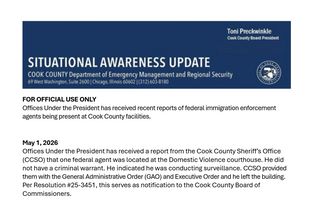
One May 1 report states a federal agent “indicated he was conducting surveillance” at the domestic violence courthouse in the West Loop.
The report does not mention any arrests, and states the agent left the building after sheriffs provided him copies of orders meant to protect people from civil (immigration) arrest while in court. The public defender data, however, indicates that federal immigration agents detained at least one person inside the domestic violence courthouse on May 1, around 9:30 a.m.
Other Cook County courthouses where the Public Defender’s Office reported the presence of federal agents include the Maywood and Rolling Meadows courthouses in the titular suburbs, the Pullman courthouse on Chicago’s far South Side, The Leighton Criminal Courthouse and the Grand and Central Courthouse on Chicago’s west side. Arrests have been confirmed at the Maywood, Pullman and Grand and Central courthouses.
The Pullman and Grand and Central courts both share building space with the Chicago Police Department. The Leighton Criminal Courthouse sits adjacent to Cook County Jail.
“A sound of the alarm to our community”
Last week saw immigration enforcement activity around multiple county courthouses. Federal agents were reported at the domestic violence court on Monday, Tuesday and Thursday, with public defenders recording one arrest there on Tuesday.
An alert sent to Cook County commissioners stated that an unarmed, plainclothes federal agent “stood outside a courtroom” at the domestic violence court on Tuesday; the same alert reported another unarmed federal agent also present at the Pullman court on Tuesday.
Thursday’s sighting at Domestic Violence Court did not appear to result in an arrest—but federal agents separately arrested a man outside the Grand and Central courthouse that day. Feds were also spotted at the Maywood and Pullman courts.
According to Katie Pelech, an attorney with the Cook County Public Defender’s Office, the person arrested outside the Grand and Central courthouse was taken by agents after a misdemeanor charge against them was dismissed. That person was one of five people arrested by federal immigration agents across the Chicago area on Thursday. The immigrant advocacy and rapid response group Hijos de Migrantes also reported a long list of 36 verified ICE vehicles sighted across Chicagoland that day.
“What we are seeing are federal agents arresting people facing low-level allegations, still cloaked in the presumption of innocence, who are following the law by showing up to court to see their cases through,” Pelech said.
Pelech joined Cook County Commissioner Jessica Vásquez and representatives from the Illinois Coalition for Immigrant and Refugee Rights on Thursday afternoon to call attention to immigration agents’ increasing courthouse presence.
“This is a sound of the alarm to our community…ICE is here, they have not left, they are targeting our courthouses, you have rights,” Vásquez said.
Vásquez also stressed that those facing court dates in Cook County can seek a virtual court appearance for certain civil and criminal proceedings. The county’s chief judge Charles Beach issued his own similar announcement Thursday, providing instructions on how to appear in court remotely.
Federal immigration presence at local court facilities continued into Friday and this week. On Friday morning, Hijos de Migrantes reported an ICE vehicle was sighted outside Domestic Violence Court. Other ICE vehicles were seen outside a Kane County court facility in St. Charles, Illinois. The Public Defender’s Office reported federal agents present at the Rolling Meadows courthouse on Friday morning.
Rapid responders again reported ICE vehicles near the Domestic Violence Court early Monday afternoon, and at the Rolling Meadows courthouse in Cook County and the Kane County court facility in St. Charles yesterday.
Today, Chicago Far South Rapid Response reported another person abducted by federal immigration agents at the Pullman courthouse adjacent to Chicago’s 5th District police station.
“Privileged from civil arrest”
Grace stressed Monday evening that there were rules and laws in place meant to protect people from immigration arrests at Illinois courthouses.
The Cook County Circuit Court issued a general administrative order last October to protect those attending court proceedings from civil arrest unless officers have a judicial warrant. Illinois Governor JB Pritzker signed a similar statewide law—the Court Access, Safety and Participation Act (CASPA)—last December. CASPA grants those attending state court proceedings a “privilege” from civil arrest, and also makes those who violate it liable for up to $10,000 in civil damages.
However, Dan Schneider, an attorney with Legal Action Chicago, said he was not aware of anyone yet seeking to file claims against federal agents for a CASPA violation. The Trump administration filed a federal lawsuit against Illinois over CASPA in late December, which is still pending.
“Conducting an arrest at or near a courthouse often reduces the risk of flight and safety risks to the public, law enforcement officers, and arrestees themselves,” the Trump administration argued in that lawsuit. “This is in part because individuals are usually screened for weapons or other contraband before entering a courthouse.”
The office of Illinois Attorney General Kwame Raoul conceded, in a February motion to dismiss the suit, that CASPA “does not task the Governor or Attorney General with any enforcement authority” and, with one exception, “does not provide for enforcement by any other Illinois official.”
That one exception refers to language in the bill describing how a court “may issue appropriate judicial orders to protect the privilege from arrest.”
Aside from the October general administrative order, the Cook County Circuit Court has not yet issued any such orders.
“I would encourage [courts] to, sooner than later, to issue orders that would, for instance, prohibit those law enforcement agents from even being on the premises, because they are only there to violate the law,” Schneider said. “They could do that tomorrow.”
Related Stories
-
In plain sight: a year of ICE using Chicago police parking lots for its operations
Videos and witness testimony show immigration agents continue using Chicago police station parking lots despite a ban on their access to city property. Records obtained from the Civilian Office of Police Accountability show the office has received at least seven complaints over ICE using police property since March.
-

Growing where he died: Silverio Villegas González, one year later
One year on from the killing of Silverio Villegas González, a community of Franklin Park women continue the fight to keep his memory alive–through art, flowers, and “a culture of celebrating life.”
-
Civilian oversight blues: inside Chicago’s ongoing police accountability meltdown
Chicago has a new community police oversight body that emerged in response to the historic 2020 protests. According to those elected to serve, however, it’s already full of cops.