“Pressure, influence, and intimidation”—house call by former Chicago cop sparks dispute among police oversight officials
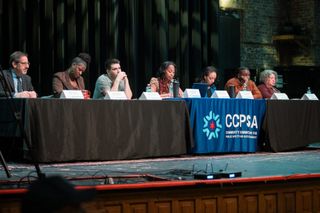
Retired Chicago police sergeant Lee Bielecki’s snooping at the home of a member of the Community Commission for Public Safety and Accountability is part of a pattern of intimidation and attempts to influence the nomination process for the commission, activists and police district councilors say.
by Dave Byrnes Mar 30, 2026
Share this article:
In a press conference Thursday, Community Commission for Public Safety and Accountability (CCPSA) youth commissioner Abierre Minor and her supporters from the Chicago Alliance Against Racist and Political Repression (CAARPR) raised safety concerns and alleged that Minor’s re-nomination to the board was derailed by individuals aligned with the Fraternal Order of Police.
Around 10 p.m. on February 17, following a meeting of the nominating committee, retired Chicago cop and current 22nd Police District Councilor Lee Bielecki went to Minor’s apartment building. Bielecki, at the time, served on CCPSA’s nominating committee, which is composed of a representative from each of the city’s 22 police “District Councils.”
The CCPSA was established by city ordinance in July 2021. By law, at least two commissioners must reside in the North Side, two in the South Side, and two in the West Side. Each police district has an elected three-member panel who serve on the local District Councils. One of the primary responsibilities of local councils is to nominate potential members of the CCPSA to the mayor for appointment.
“Imagine you’re applying for a job, you’re in the midst of the selection, and one of your evaluators shows up at your door at 10 pm because they don’t like you personally,” Minor said at the presser.
Bielecki does not dispute that he went to Minor’s home, according to emails reviewed by Unraveled. He says he went because he had doubts about her residency on the North Side.
According to Minor, Bielecki interrogated building security about her unit and lease.
“I did go to the building once we learned at the meeting that Commissioner Minor supposedly moved to a Northside address to allow herself to be considered for reappointment,” Bielecki said. “I did so to inquire or verify if this was indeed factual. At NO time did I request her presence nor intend to meet with her.”
Bielecki apologized to Minor in the same message, denied he made any threats against her, and subsequently recused himself from the nominating committee.
At Thursday night’s monthly CCPSA meeting, Bielecki added that “none of the bylaws prohibit me from doing that:”
Minor was nevertheless disturbed by the incident, which she made known both to the nominating committee in February and to attendees of Thursday’s press conference. She said that after Bielecki’s visit, her grandmother urged her to resign her seat, citing the history of “bad actors showing up at Black homes in the middle of the night.”
“She made a plea that no public servant should ever have to hear from their family,” Minor said. “She told me that this work is not worth my life, she told me she does not want to bury me or my brothers or anyone attached to my last name because of my advocacy.”
Angelica Green, another nominating committee member and councilor for the 25th Police District on Chicago’s Northwest Side, said in a prepared statement she would be submitting a formal complaint to Chicago’s Office of the Inspector General over Bielecki’s actions.
“The situation involving Councilor Lee Bielecki going to Commissioner Minor’s home raises serious concerns about judgment, professionalism, and respect,” Green said. “It also underscores the importance of ensuring that all commissioners are able to serve without fear, intimidation, or inappropriate intrusion into their personal lives.”
In an emailed statement, CAARPR claimed Bielecki had “mobilized FOP allies” to block Minor’s renomination.
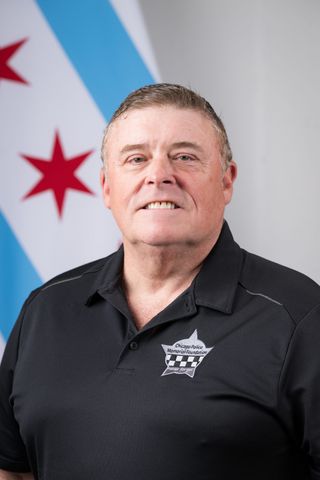
The nominating committee censured Bielecki over his visit to Minor’s residence on March 4 in a measure signed by 17 committee members, including fellow 22nd District Council member Carisa Parker, who replaced Bielecki as its nominator.
This was not the first time Bielecki intervened in the appointment of those he considered too anti-police for the city’s police district councils.
In November 2024, when the 17th District Police Council had a vacancy, Bielecki wrote a letter to members of the city’s Police and Fire Committee, urging them to reject Grace Patino’s appointment to the council. Patino, a member of CAARPR, has frequently attended 17th District Council and CCPSA meetings since the bodies were created. The 17th District includes Northwest Side neighborhood Albany Park.
In his letter, Bielecki cited Patino’s earlier public comments to the Chicago Board of Police, where she criticized police superintendent Larry Snelling for not reopening an investigation into police who appeared on an Oath Keepers membership list and called for justice over the police killing of 26-year-old Dexter Reed in March 2024. Noting she did not mention that Reed also shot at police, Bielecki argued Patino’s appointment to a police district council would not further the goal of public-police cooperation.
“Patino collaborates with anti-police organizations that would not further the mission of District Councils. Only through collaboration with the Chicago Police Department can we get better results in both public safety and accountability,” he wrote.
The letter against Patino was signed by the entirety of the 22nd, 8th and 16th District Councils, which together include majority white neighborhoods on the city’s far Southwest and Northwest sides. Council members from the 5th, 9th, 14th and 18th District Councils also signed Bielecki’s letter. Patino was not placed on the 17th District Council.
According to the Civic Police Data Project, Bielecki had 26 complaints lodged against him between November 1985 and December 2012. These include allegations of excessive use of force and illegal searches. None of the complaints were sustained—however, all of the complaints predate the Civilian Office of Police Accountability (COPA), established in 2016 because the previous body, the Independent Police Review Authority (IPRA), rarely sustained allegations against officers.
“The process must be fair”
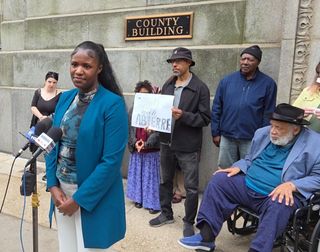
Nominating committee member Michelle Paige of the 12th District Council and former committee member Arewa Najm Ekua of the 15th District Council—who says she resigned from the committee after its last session over “toxic” racism she experienced—both represent Chicago’s West Side. They spoke at Thursday’s press conference.
Both voiced support for Minor, with Ekua demanding that her name be submitted to Mayor Brandon Johnson for reconsideration for service on the commission.
“Even though she’s from another side of the city, Abierre Minor is one of the commissioners that I feel represents me the most,” Ekua said.
Some members of the nominating committee condemned Bielecki’s actions, while also disputing that he impacted the fairness of the process.
In a statement released Thursday afternoon, the four nominating committee liaisons, including Green, denied that Bielecki’s actions had any impact on the committee’s votes.
“Councilor Bielecki’s inappropriate and unsanctioned actions did not have any effect on the final result. The nominating committee extended Commissioner Minor an interview and gave her application full consideration,” the statement read. “In the end, Commissioner Minor did not have the support of two-thirds of the nominating committee—15 of 22 members—required by city ordinance for nomination.”
Nominating committee member Sam Schoenburg, who represents the 19th Police District on the North Side and signed the liaisons’ statement, said a public vote on Minor’s nomination never took place.
“No public vote on Ms. Minor’s nomination was held, because no member of the Nominating Committee—including two individuals who spoke at today’s press conference—moved to nominate her,” Schoenburg said.
Seventh District councilor Dion McGill said there was support for renominating Minor behind closed doors, particularly among progressive nominators and people of color on the police district councils. He argued that Minor’s supporters “felt defeated” by the time nominations were being made, pointing to resistance from what he said was a conservative block of nominators.
“At a certain point it was obvious that the conservative block was not going to vote on anything with Minor’s name on it,” McGill said.
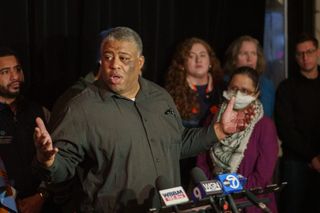
Green, in her personal statement, also noted the committee had the chance to pause the process but chose to proceed.
“Staff offered the committee the opportunity to pause the process following the February 17th incident. As a committee, we made the decision to proceed, believing it was the most appropriate course of action at the time while the matter was being addressed,” Green wrote.
CAARPR issued a subsequent statement late Thursday afternoon, maintaining that Minor faced “obstruction perpetrated by the Fraternal Order of Police.”
The group urged the mayor to “conduct a full review and investigation,” and to demand a revote from the nominating committee to ensure “all applicants are fairly reconsidered.”
McGill said he agreed with the characterization of the conservative block of CCPSA nominators as FOP-aligned, noting that two other nominators—Tom McMahon of the 5th District and Robert Johnson of the 18th District—are also former police officers.
“The nominating committee has always had a lot of racial tensions,” he said. “That’s just part of this work.”
With this in mind, he argued Bielecki’s actions—a white former police officer and a man showing up at the home of a Black woman serving as a police accountability commissioner, and an outspoken progressive—should have immediately halted the nomination process.
“There was an insinuation [Minor] was unqualified,” McGill said, pointing to a February 19 meeting where Bielecki’s actions were discussed. “Literally one of the nominators wrote on a black board, ‘cause and effect.’ The cause of this was Commissioner Minor…the effect was Bielecki getting so mad that he went to Minor’s home.”
Minor said that a letter had been sent to the mayor’s office calling for a reassessment of the nomination process. The letter was signed by 18 police district councilors, including Ekua, Paige, and McGill, as well as representatives from CAARPR and its national body NAARPR. All 18 councilor signatories, including McGill, are people of color.
Their letter said that beyond Bielecki’s actions, “there has been a pattern of pressure, influence, and intimidation directed at participants in an effort to shape the slate of nominees.”
The letter’s signatories echoed CAARPR in calling on Mayor Johnson to pause the current CCPSA nominating process, investigate what happened during that process, and hold a new vote for commission applicants.
The nominating committee liaisons, however, opposed any measure that would overturn the six nominees approved earlier this month. The current nominees include Anjanette Young, who was the victim of a wrong-address Chicago police raid in February 2019 and went on to become a high-profile advocate for police reform, and Rebecca Levin, a public health expert who works with the social services nonprofit Treatment Alternatives for Stronger Communities and advocates for viewing community violence as a public health concern.
“This morning’s letter and press conference called upon the mayor to reject these two exceptional candidates,” the nominating committee’s statement said. “But the demands go even further, calling on the mayor to reject all nominees, including four youth candidates under the age of 25.”
The letter signed by 18 district councilors said their call for a revote wasn’t meant as an attack on the new commission nominees, and they “should not bear responsibility for the failures of the process.”
“Our goal is simple,” the 18 district councilor’s letter read. “The process must be fair. It must be accountable. And it must reflect the democratic and ethical standards that Chicago residents deserve.”
The mayor’s office said only that it received the letter and “is reviewing the situation.”
McGill meanwhile maintained that after Bielecki went to Minor’s home, the process was “marred” and should have been immediately halted. He rebuked Bielecki as someone with racist and obstructionist tendencies, saying he and those aligned with him do not understand why CCPSA exists.
“The reason we’re all here is because the system needs to be changed,” he said.
Related Stories
-

Border Patrol agents ignored orders to end car chase before gassing Chicago neighborhood
DHS claimed federal agents intentionally hit a fleeing vehicle to try to stop the driver in Chicago’s East Side neighborhood last October—but videos of the 18-minute high-speed pursuit show they actually blew a tire and crashed after ignoring a supervisor’s commands to end the chase.
-

Identified: the El Paso BORTAC crew rampaging through the Midwest
One violent duo in particular, U.S. Border Patrol agents Michael Sveum (EZ-2) and Edgar Vazquez (EZ-17), have been frequently seen alongside former commander-at-large Greg Bovino terrorizing crowds with chemical weapons in Chicago and the Twin Cities.
-

Cook County State’s Attorney has “taken no action whatsoever” against feds, new lawsuit alleges
The suit seeks the appointment of a special prosecutor to investigate potentially unlawful conduct by federal agents in Illinois.